What Are Casters and How Do They Work?
What Are Casters and How Do They Work?
When it comes to moving heavy equipment or furniture with ease, casters play an essential role in countless industries. A caster is a wheeled device mounted to the bottom of objects, allowing them to roll smoothly across floors instead of being dragged or lifted. From office chairs to industrial machinery, casters simplify mobility and improve efficiency.
Casters generally consist of three main parts: the wheel, the bracket (also called the fork or yoke), and the mounting system—such as a plate, stem, or bolt hole. The wheel itself can be made from various materials, including rubber, polyurethane, nylon, and metal, depending on the application and floor surface. The bracket holds the wheel in place and determines the caster’s stability and load capacity. The mounting system secures the caster to the object, ensuring safe and reliable performance during movement.
There are two primary types of casters: rigid and swivel. Rigid casters move only in a straight line, offering stability for pushing and pulling in controlled directions. Swivel casters, on the other hand, can rotate 360 degrees, providing greater maneuverability in tight spaces. Many applications combine both types to balance control and flexibility.
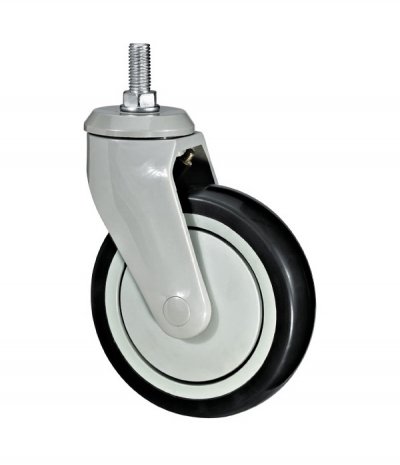
The science behind how casters work lies in reducing friction. By replacing sliding motion with rolling motion, casters minimize resistance between the object and the floor. This reduction allows even a single person to move loads that would otherwise require multiple people or mechanical lifting devices. Advanced designs also incorporate features such as precision ball bearings and shock-absorbing materials to enhance smooth operation and durability.
In manufacturing, quality and design precision are critical. China Hsinbon Caster Manufacturing Co., Ltd. focuses on engineering casters that meet diverse operational demands, from light-duty furniture wheels to robust industrial solutions capable of handling extreme weights and challenging environments. Their production processes emphasize material selection, structural strength, and consistent performance, ensuring each caster operates reliably under real-world conditions.
Whether in warehouses, hospitals, retail stores, or factories, casters make daily operations faster, safer, and more efficient. Understanding their components and mechanics helps businesses choose the right type for their specific needs—an investment that pays off in productivity and workplace safety.
Would you like me to also create a diagram showing the structure of a caster so your article can be more visually engaging?