A Complete Guide to Caster Wheel Materials
Choosing the right caster wheel material is one of the most important decisions when specifying mobility solutions. The tread material directly affects rolling resistance, floor protection, noise levels, load capacity, and resistance to chemicals or extreme temperatures. Selecting incorrectly can lead to damaged floors, difficult-to-move equipment, or premature caster failure.
Below is a practical guide to the most common caster wheel materials and where they perform best.
1. Polyurethane (PU)
Polyurethane wheels are among the most versatile choices in industrial and commercial environments. They offer an excellent balance between hardness and elasticity, combining the load capacity of harder wheels with the floor protection of softer ones.
Key Advantages:
Non-marking and resistant to oil, grease, and many chemicals.
High abrasion resistance for long service life.
Smooth, quiet rolling with reduced vibration.
Good performance on concrete, tile, and epoxy-coated floors.
Typical Applications: Warehouse carts, logistics dollies, automotive assembly lines, and platform trucks.
2. Rubber and Thermoplastic Rubber (TPR)
Rubber wheels are known for their shock absorption and quiet operation. TPR combines the benefits of rubber with added durability and chemical resistance.
Key Advantages:
Excellent floor protection, ideal for delicate surfaces.
Superior grip and traction.
Reduces noise in noise-sensitive environments.
Good performance on slightly uneven or rough floors.
Typical Applications: Hospital beds, laboratory carts, office furniture, and retail display units.
3. Nylon and Glass-Filled Nylon
Nylon wheels are extremely tough and lightweight, with very low rolling resistance. Glass-filled variants add extra strength and dimensional stability.
Key Advantages:
Resistant to water, oils, solvents, and many chemicals.
Easy to roll under heavy loads.
Performs well in wet or washdown environments.
Withstands high temperatures better than many plastics.
Typical Applications: Food processing plants, cold storage facilities, pharmaceutical labs, and cleanrooms.
4. Phenolic Resin
Phenolic wheels are made from a composite of phenolic resin and macerated fabric, resulting in a very hard, durable wheel.
Key Advantages:
Extremely high load capacity relative to size.
Resists oil, grease, and chemical exposure.
Does not absorb moisture.
Performs well under high static loads.
Typical Applications: Bakeries, kilns, dry storage areas, and heavy manufacturing.
5. Cast Iron and Steel
Steel wheels are built for extreme durability and heavy loads, but they are very hard and transmit vibration.
Key Advantages:
Maximum load capacity.
Excellent resistance to heat and impact.
Long service life under harsh conditions.
Typical Applications: Foundries, steel mills, heavy fabrication shops, and metalworking facilities (best on steel or extremely hard floors).
6. Pneumatic and Flat-Free Wheels
These wheels are designed for outdoor and uneven-terrain applications. Pneumatic wheels are air-filled, while flat-free wheels use solid foam or resilient rubber.
Key Advantages:
Absorb shocks and vibrations over bumps and potholes.
Provide excellent traction on grass, gravel, and dirt.
Reduce cargo damage caused by rough surfaces.
Typical Applications: Garden carts, construction equipment, agricultural trailers, and outdoor utility wagons.
Quick Selection Reference
Material | Floor Protection | Noise Level | Load Capacity | Chemical Resistance | Best Environment |
|---|---|---|---|---|---|
Polyurethane | ★★★★☆ | ★★★★☆ | ★★★★★ | ★★★★☆ | General industrial |
Rubber / TPR | ★★★★★ | ★★★★★ | ★★★☆☆ | ★★★☆☆ | Hospitals, offices |
Nylon | ★★★☆☆ | ★★☆☆☆ | ★★★★☆ | ★★★★★ | Washdown, cold storage |
Phenolic | ★★☆☆☆ | ★★☆☆☆ | ★★★★★ | ★★★★☆ | Dry, heavy-load areas |
Steel | ★☆☆☆☆ | ★☆☆☆☆ | ★★★★★ | ★★★★★ | Extreme heavy-duty |
Pneumatic | ★★★★☆ | ★★★☆☆ | ★★★☆☆ | ★★★☆☆ | Outdoor, uneven terrain |
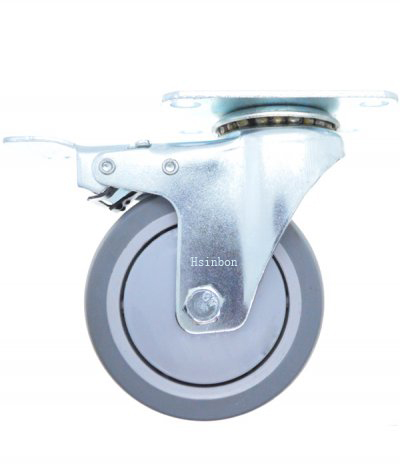
The right wheel material ensures safer operation, lower maintenance costs, and longer equipment life. China Hsinbon Caster Manufacturing Co., Ltd. produces caster wheels in a wide variety of materials—including polyurethane, rubber, nylon, phenolic, and steel—each engineered for specific performance requirements and tested for durability under real-world operating conditions.
If you’d like, I can now prepare the final article in this series: “How to Match Caster Wheel Material to Your Floor Type for Maximum Performance.”