Polyurethane Casters: Pros and Cons
Polyurethane (PU) caster wheels have become one of the most popular choices across warehouses, manufacturing plants, and distribution centers. Often seen as the "middle ground" between soft rubber and hard nylon or steel, polyurethane combines load-bearing strength with floor friendliness. However, like any material, it is not ideal for every situation.
Below is a clear breakdown of the advantages and limitations of polyurethane casters to help you decide whether they fit your application.
What Is a Polyurethane Caster?
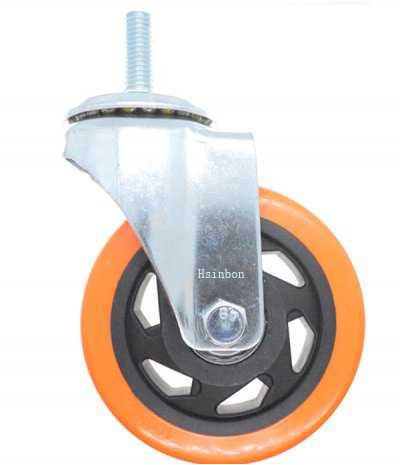
A polyurethane caster features a wheel with a PU tread (either molded or bonded to a core such as aluminum, nylon, or iron) over a central hub. The polyurethane elastomer provides cushioning and grip while the core adds structural support under heavy loads.
✅ Pros of Polyurethane Casters
1. Excellent Floor Protection
PU treads are typically non-marking and non-staining, making them suitable for painted concrete, epoxy-coated floors, and polished surfaces—unlike steel or phenolic wheels that may scratch or leave black marks.
2. High Load Capacity
Polyurethane can carry significantly heavier loads than standard rubber of the same diameter, making it ideal for medium- and heavy-duty industrial carts.
3. Good Abrasion & Wear Resistance
High-quality PU formulations resist chunking, cracking, and flat-spotting far better than soft rubber, extending caster life in high-use environments.
4. Reduced Rolling Resistance
PU rolls more easily than rubber, requiring less effort to start and maintain movement—an important factor in ergonomic manual-push applications.
5. Oil, Grease & Chemical Resistance
Polyurethane generally withstands exposure to oils, greases, and many industrial chemicals better than natural rubber, though compatibility should always be checked against specific solvents.
6. Quieter Than Hard Wheels
While not as silent as soft rubber, PU wheels are noticeably quieter than nylon or steel and dampen minor vibrations on uneven floors.
❌ Cons of Polyurethane Casters
1. Temperature Limitations
Standard polyurethane typically performs best between approximately –20°C and +80°C (–4°F to +176°F). Prolonged exposure to higher heat can cause softening, accelerated wear, or deformation. For ovens, kilns, or autoclaves, phenolic or steel may be preferable.
2. Not Ideal for Wet, Icy, or Loose-Surface Floors
On slick, wet, or icy surfaces, PU offers less traction than rubber. It is also unsuitable for gravel, grass, or deeply uneven outdoor terrain—pneumatic wheels are better in those cases.
3. UV & Ozone Sensitivity
Some polyurethane compounds can degrade with long-term exposure to direct sunlight or ozone. Indoor or covered applications are usually problem-free, but outdoor all-weather use may require UV-stabilized formulations.
4. Higher Cost Than Rubber or Nylon
PU casters are generally more expensive than basic hard rubber or unreinforced nylon wheels, though the extended service life often offsets the initial price difference.
When to Choose Polyurethane Casters
✅ Best for:
Indoor industrial environments with smooth to slightly rough floors
Heavy to medium-heavy loads requiring easy manual or powered movement
Applications where floor protection and non-marking performance matter
Warehouses, assembly lines, and distribution centers
❌ Not recommended for:
Extremely hot environments (above PU’s rated temperature)
Deeply uneven outdoor terrain or loose surfaces
Areas with prolonged UV exposure unless UV-stabilized PU is specified
Polyurethane remains one of the most balanced caster wheel materials for general industrial use. China Hsinbon Caster Manufacturing Co., Ltd. offers a broad range of polyurethane caster wheels—with various tread hardnesses, core materials, bracket styles, and mounting options—engineered for durability, dimensional accuracy, and reliable rolling performance across demanding workplace environments.
If you’d like, I can wrap up your caster article series with “How to Calculate Load Capacity & Select the Correct Caster Size for Your Equipment.” Just let me know!