The Basic Components of a Caster Wheel
Although a caster may look like a simple wheel attached to a piece of equipment, it is actually a carefully engineered assembly of multiple components working together to provide smooth, stable mobility under load. Understanding the basic parts of a caster wheel helps buyers select the right model for their application and helps maintenance teams identify wear or damage before it leads to downtime.
1. The Wheel (Tread & Hub)
The wheel is the rolling element that makes direct contact with the floor. It typically consists of a hub—the central structure that houses the bearings—and a tread or tire bonded or molded around it. Common tread materials include polyurethane, rubber, nylon, polypropylene, and phenolic resin. The choice of material affects floor protection, noise level, rolling resistance, and chemical or temperature resistance. The hub is usually made of steel, aluminum, or reinforced plastic to maintain structural integrity under heavy compression.
2. Wheel Bearings
Located inside the wheel hub, bearings allow the wheel to rotate freely around the axle with minimal friction. Ball bearings deliver the smoothest, easiest push under moderate loads; roller bearings are favored for higher-load industrial applications; and plain sleeve bushings are a low-maintenance option for slower speeds or wash-down environments. Properly matched and lubricated bearings extend caster life and reduce the effort required to move equipment.
3. The Fork / Yoke (Bracket)
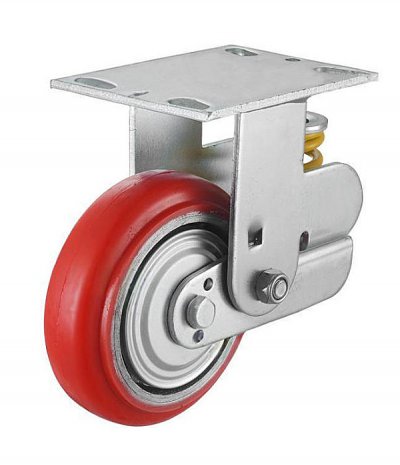
The fork—also called the yoke, rig, or housing—is the inverted U-shaped metal frame that holds the wheel in place via the axle. In a swivel caster, the fork is connected to the top plate or stem through a swivel head containing a raceway and balls or thrust washers. In a rigid caster, the fork is fixed directly to the mounting plate so the wheel travels only in a straight line. The thickness and material of the fork (typically pressed or forged steel, stainless steel, or zinc-plated carbon steel) largely determine the caster's load capacity and resistance to deformation.
4. Mounting System – Top Plate or Stem
The mounting system secures the caster to the equipment. The most common option is a top plate—a flat, square or rectangular steel plate with pre-drilled bolt holes—bolted to the underside of the cart or machine. Alternatively, stem mounts (threaded stem, grip-ring stem, or expanding adapter stem) insert into a receiving hole in the furniture or apparatus. The mounting interface must match the equipment exactly to prevent loosening or uneven load distribution.
5. Swivel Head / Raceway (Swivel Casters Only)
A swivel caster includes an upper and/or lower raceway between the top plate and the fork, with hardened steel balls or a precision thrust bearing in between. This assembly allows 360-degree rotation and transfers the vertical load from the top plate down through the fork to the wheel. Double-ball raceways are common in medium- and heavy-duty casters for improved strength and smoother steering.
6. Axle Bolt & Nut
The axle passes through the wheel hub and the two legs of the fork, securing the wheel in position. In heavy-duty models, a shouldered axle and lock nut or cotter pin keep everything tight under dynamic loads. Some light-duty casters have a riveted or integrally molded axle that is not removable.
Optional Accessories
Depending on the design, casters may also include total-lock or directional brakes, thread guards to keep debris out of the wheel hub, dust caps over the swivel raceway, and spring-loaded or shock-absorbing units for sensitive cargo.
Every part—from the tread compound to the swivel raceway—must be suited to the intended environment and load. China Hsinbon Caster Manufacturing Co., Ltd. produces a comprehensive range of caster assemblies with various wheel materials, bracket styles, and mounting options, focusing on dimensional accuracy, robust welding, and reliable bearing performance to meet the demands of industrial, commercial, and institutional applications.
If you'd like, I can also prepare a labeled diagram of caster components to accompany this article for catalogs or website use.