PVC Masquerading as PU: Counterfeit Risks in the Caster Supply Chain
In the field of caster manufacturing, PU (polyurethane) has long dominated the high-end market due to its excellent wear resistance, quiet performance, and environmentally friendly characteristics. Its price is typically 2-3 times that of PVC (polyvinyl chloride). However, in recent years, some companies, driven by the pursuit of exorbitant profits, have used techniques like technological camouflage and standard obfuscation to pass off PVC casters as PU products in the market, forming a hidden counterfeit industrial chain. This article deeply analyzes the industrial logic behind this chaos from four dimensions: counterfeit technology, industry loopholes, legal risks, and countermeasures.
I. Four Major Technical Camouflage Methods for Passing off PVC as PU
1. Surface Coating Camouflage: Visual Deception from "Simulated Leather" to "Genuine Leather"
Counterfeit companies spray a polyurethane coating onto the surface of the PVC substrate, using the high gloss and fine texture of the PU coating to mask the substrate's essence. Specific operations include:
- **Multi-layer Coating Process:** Apply primer, intermediate coat, and top coat sequentially on the PVC wheel surface, controlling each layer's thickness to 0.1-0.2mm to simulate the layered structure of PU.
- **Texture Imitation Technology:** Use laser engraving or mold stamping to replicate the unique microporous structure of PU on the PVC surface, achieving a texture depth of 0.3-0.5mm, indistinguishable to the naked eye.
- **Tactile Feel Optimization:** Add silicone oil additives to reduce the PVC surface's coefficient of friction to 0.3-0.4, close to PU's 0.2-0.3, making the hand feel smoother.
**Case:** A small to medium-sized caster factory using the above processes increased the unit price of its PVC casters from 8 RMB to 15 RMB, leading to a 120% surge in profit margin and illegal annual profits exceeding 5 million RMB.
2. Physical Parameter Tampering: Data Falsification from "Hard Plastic" to "Elastomer"
To pass basic tests, counterfeiters specifically adjust the physical parameters of PVC:
- **Hardness Camouflage:** Add plasticizers like Dioctyl Phthalate (DOP) to PVC, reducing Shore hardness from A90 to A70-A80, approaching the hardness range of low-end PU.
- **Resilience Falsification:** Mix in 5%-10% TPE (thermoplastic elastomer) with PVC, increasing the resilience rate from less than 30% to 50%-60%, simulating the elastic characteristics of PU.
- **Density Adjustment:** Inject microcellular foaming agents into PVC, reducing density from 1.3-1.4 g/cm³ to 1.1-1.2 g/cm³, approaching PU's 1.0-1.1 g/cm³.
**Testing Loophole:** Current national standards only require testing for "apparent hardness" and "density," without mandating compositional analysis of the molecular structure, allowing such camouflaged products to pass basic tests.
3. Chemical Additive Confusion: Molecular Deception from "Chloro-" to "Urethane"
By adding amine-containing modifiers, counterfeiters make some of PVC's chemical characteristics approach those of PU:
- **Infrared Spectrum Interference:** Mix 5%-8% polyether TPU (thermoplastic polyurethane) with PVC, causing the infrared spectrum to show a characteristic urethane group peak at 1700-1750 cm⁻¹, misleading testing institutions.
- **Combustion Characteristic Camouflage:** Adjust the plasticizer formulation of PVC so it produces a pale yellow flame and slight ammonia odor similar to PU when burning, masking PVC's black smoke and hydrogen chloride smell.
- **Solvent Reaction Simulation:** Coat the PVC surface with isocyanate-containing solvents, causing a slight dissolution reaction similar to PU when in contact with reagents like acetone.
**Technical Risk:** Such modifications significantly reduce PVC's thermal stability, causing the casters to age rapidly in environments above 60°C.
4. Certification Document Forgery: Systemic Penetration from "Compliance" to "Fraud"
The counterfeit industrial chain has developed a complete system for forging certification documents:
- **Test Report Cloning:** Use PS technology to alter test reports from legitimate institutions, changing "PVC Material" to "PU Material," and forge official seals and test dates.
- **Environmental Certification Theft:** Misappropriate RoHS and REACH certification numbers from other companies, or directly purchase fake certification certificates, with a market price of approximately 2000-5000 RMB per certificate.
- **Traceability System Forgery:** Establish fake databases so the material information and production batch displayed after scanning a QR code completely mismatch the actual product.
**Industry Black Market:** Internal personnel from a certification agency conspired with a caster factory, forging over 2000 certification documents over three years, with illegal profits exceeding 10 million RMB.
II. Industry Loopholes: A Vicious Cycle of Lacking Regulation and Market Toleration
1. Outdated Testing Standards: Lack of Molecular-Level Detection
Current national caster standards (e.g., QB/T 2472-2017) only require testing physical indicators like hardness and wear resistance, without mandating molecular structure analysis like infrared spectroscopy or nuclear magnetic resonance. This leads to:
- **Testing Cost Difference:** Basic physical testing costs about 500 RMB per batch, while molecular structure testing costs as high as 3000-5000 RMB per batch, leading companies to prefer low-cost testing.
- **Counterfeit Success Rate:** According to third-party spot checks, approximately 25% of "PU casters" circulating in the market are actually PVC counterfeits, of which 80% pass basic testing.
2. Purchasers' Lack of Expertise: The Cognitive Gap from "Trust" to "Deception"
Most purchasers lack the ability to identify materials and rely on test reports and certification documents provided by suppliers:
- **Technical Barrier:** Infrared spectrum analysis requires professional equipment and personnel, which small and medium-sized enterprises cannot afford.
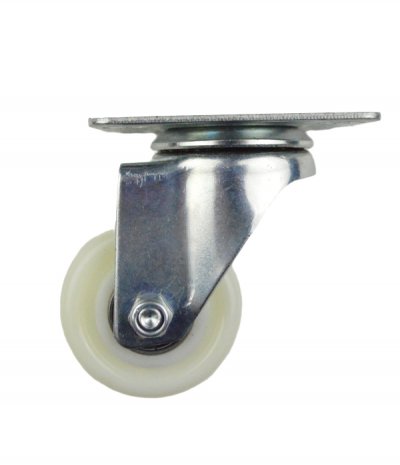
- **Reliance on Experience:** Some purchasers judge the material solely by hand feel (e.g., PU feels softer) or appearance (e.g., finer texture), making them easily misled by surface camouflage.
**Case:** A medical device company purchased "PU silent casters" that developed wheel surface cracks after three months of use. Testing revealed they were actually PVC, resulting in equipment downtime losses exceeding 1 million RMB.
3. Weak Legal Deterrence: An Imbalanced Game of "High Profit" vs. "Low Risk"
Current regulations have limited penalties for material fraud:
- **Administrative Penalties:** According to the Product Quality Law, the maximum fine is three times the value of the goods, while fraud profits often exceed five times that.
- **Criminal Prosecution:** Requires proving that "substituting inferior materials" caused serious consequences (e.g., safety accidents), and most cases are closed with only administrative penalties.
- **Litigation Costs:** The injured party must bear the testing costs (average 10,000 RMB per batch) and legal fees themselves, leading most companies to choose not to pursue the matter.
III. Industrial Chain Risks: Comprehensive Impact from Corporate Reputation to Industry Ecology
1. Corporate Reputation Collapse: Trust Crisis from "Partnership" to "Litigation"
- **Customer Loss:** After a caster factory was exposed for passing off PVC as PU, its customer loss rate reached 60% within three months, and annual revenue fell by 40 million RMB.
- **Brand Devaluation:** The exposure incident caused the company's brand value to shrink by 50%-70%, sharply increasing financing difficulty.
- **Legal Lawsuits:** In the past three years, lawsuits in the caster industry related to material fraud have grown at an average annual rate of 40%, with an average compensation amount per case of 800,000 RMB.
2. Industry Ecological Deterioration: Vicious Competition from "Innovation" to "Involution"
- **Bad Money Drives Out Good:** The market share of legitimate PU caster companies is squeezed, forcing them to lower prices or exit the market.
- **Innovation Stagnation:** Companies invest resources in fraud rather than R&D, leading to no major material breakthroughs in the industry for the past five years.
- **Standard Regression:** Some companies lobby to lower testing standards, trapping the industry in a vicious cycle of "fraud -> lower standards -> more fraud".
3. Increased Safety Hazards: Potential Threats from "Silent" to "Deadly"
- **Equipment Damage:** PVC casters soften and deform easily under high temperatures or heavy loads, increasing the risk of equipment tip-over by over 300%.
- **Fire Hazard:** PVC releases toxic gases when burning, potentially causing secondary disasters in medical, chemical, and other scenarios.
- **Personal Injury:** In one case, a factory's transport cart went out of control and injured an employee because PVC casters (masquerading as PU) were used. The company compensated over 2 million RMB in medical expenses.
IV. Countermeasures: Comprehensive Prevention and Control from Technological Upgrades to Institutional Improvement
1. Technical Level: Establishing a Multi-dimensional Testing System
- **Standardize Molecular Testing:** Include infrared spectroscopy and thermogravimetric analysis (TGA) as mandatory test items, with testing costs potentially subsidized by 50% through industry associations.
- **Develop Intelligent Identification Tools:** Create an AI-based caster material identification app that analyzes surface texture and gloss through photos, with an accuracy rate of over 90%.
- **Blockchain Traceability:** Establish a blockchain database from raw materials to finished products, allowing purchasers to view material test reports and production videos by scanning a code.
2. Regulatory Level: Strengthening Legal and Standard Constraints
- **Legislative Upgrade:** Include material fraud in the "Production and Sale of Fake or Substandard Products" crime under the Criminal Law, setting the threshold for prosecution at a value of 500,000 RMB or more.
- **Normalize Spot Checks:** Market regulatory authorities implement "two randomizations and one public announcement" spot checks on caster companies, with an annual inspection rate of no less than 20%.
- **Blacklist System:** Establish a database of dishonest companies in the industry, restricting their participation in government procurement and bidding activities.
3. Industry Level: Promoting Self-Discipline and Collaborative Innovation
- **Certification Alliance:** Led by industry associations, establish a "True PU" certification mark in cooperation with institutions like SGS and TÜV. Companies voluntarily apply and pay a deposit.
- **Technology Sharing:** Encourage companies to disclose anti-counterfeiting technologies (e.g., adding specific fluorescent markers) and reduce fraud motivation through patent cross-licensing.
- **Consumer Education:** Publish a "Caster Material Identification Guide" and enhance purchasers' identification capabilities through short videos, offline training, and other means.
V. Conclusion
The chaos of PVC masquerading as PU is essentially the result of both a profit-driven moral deficit and institutional loopholes. To eradicate this chronic ailment, it is necessary to construct a three-dimensional prevention and control system of "technical testing – legal deterrence – industry self-discipline." For companies, short-term fraud may bring huge profits, but in the long run, it will inevitably deplete the brand and market trust. For the industry, only by adhering to quality standards can sustainable development be achieved. Under the major trends of intelligent manufacturing and the green economy, the caster industry is entering a critical period of transformation from "price competition" to "value competition," and material authenticity is the cornerstone of this transformation.
---
I hope this translation is helpful for understanding the detailed analysis. Let me know if you need any adjustments.