Casters for Theater and Stage Equipment: Silent Mobility Behind the Scenes
When the house lights dim and the curtain rises, the audience sees only the performance—actors crossing the stage, elaborate sets sliding on and off in seconds, lighting trusses gliding into position. What they do not see is the quiet, disciplined choreography happening beneath those scenery wagons, camera dollies, props tables, and speaker stacks. At the heart of that hidden movement are casters engineered for silence, floor protection, and absolute reliability under load. For more than twenty years, China Hsinbon Caster Manufacturing Co., Ltd. has focused on exactly these demands, producing specialty mobility solutions for entertainment, theatrical, and stage applications under the brand Hsinbon. In a world where a squeaky wheel can ruin a dramatic moment and a failed brake can compromise actor safety, Hsinbon casters are built to disappear into the performance—quietly doing their job so the show can go on.
The Unique World of Stage Mobility
A theater is not a warehouse. The floors are often polished hardwood, sprung dance surfaces, or expensive vinyl that must not be scratched. The loads—scenery wagons carrying massive set pieces, lighting truss dollies loaded with moving heads and cables, sound-system risers—can be substantial, yet they must be moved by a single stagehand with whisper-quiet smoothness. During scene changes, a wagon may need to glide five meters sideways and stop dead, with no wobble and no noise. After positioning, it must stay locked in place even if an actor leaps onto it.
Standard industrial casters—zinc-plated, greased openly, with hard treads—are wrong for this environment. They rust from humidity in backstage damp corners, they squeak, they mark the stage floor, and their brakes may not hold on a slightly warped wooden plank. Hsinbon addresses these realities with a dedicated theater and stage caster platform: non-marking polyurethane or elastic rubber treads, sealed precision bearings, matte black or custom-finished housings to avoid light reflection under spotlights, and total-lock braking systems that immobilize both wheel and swivel with one pedal press.
Non-Marking, Low-Noise Treads: Protecting the Stage Floor
Stage floors are sacrosanct. Many are painted with multiple layers of dancer-grade vinyl or traditional Masonite, refinished between productions at significant cost. A caster that leaves black streaks or gouges the surface is unacceptable. Hsinbon theater-series casters use 85–95 Shore A gray or clear polyurethane treads, compression-molded onto aluminum or nylon cores. This compound is specifically selected for high rebound, low rolling resistance, and—critically—non-marking behavior even after prolonged static loading.
For older houses with slightly uneven plank stages, Hsinbon also offers elastic rubber treads (approx. 65–70 Shore A) that conform microscopically to gaps and joints, reducing vibration transmitted to delicate set pieces while rolling almost silently. Both tread options are bonded—not glued—to the core to prevent separation under heavy loads, and both resist oils, sweat, and the occasional spilled beverage that finds its way backstage.
Sound matters. In intimate theaters or during blackout scene shifts with no music cue, the audience can hear a poorly engineered caster rattling over a floor seam. Hsinbon uses precision ball or tapered roller bearings in the wheel hub and a double-ball swivel raceway with factory-applied, long-life lubricant—never loose enough to fling, never dry enough to chirp. The result is a caster that glides rather than clatters.
Low Profile and Discrete Aesthetics
Scenery wagons are typically built with very little ground clearance—often just 12–20 mm (½–¾ inch) between the bottom of the plywood platform and the stage floor. That constraint demands low-profile casters with a small overall height but adequate load capacity. Hsinbon produces stage-specific models with installed heights starting at approximately 50 mm for mini-wagons and props carts, scaling up to 100–150 mm for heavy scenery dollies and lighting truss bases.
Aesthetics are considered too. Bright zinc or chrome finishes can catch and reflect stage light, betraying the position of a supposedly "invisible" wagon. Hsinbon offers matte black powder-coated or dark zinc-plated yokes for low-visibility installations. On custom orders, the company can supply casters with blackened top plates and dark-anodized aluminum cores—details that matter to set designers aiming for total immersion.
Braking and Positioning: Locking a Wagon in Place
Once a scenery wagon is rolled onstage and aligned to millimeter precision, it must not drift. Actors may climb onto it, dancers may land on it, and crew may lean ladders against it. Hsinbon specifies total-lock brakes on theater casters: a single foot pedal simultaneously engages a cam that stops wheel rotation and a plunger or lock-ring that prevents swivel action. This dual immobilization is far safer than a wheel-only brake, which would still allow the caster fork to pivot and the wagon to creep sideways.
For larger wagons employing a split configuration—two swivel casters at one end and two rigid casters at the other—Hsnbon recommends directional (swivel-lock) brakes on the swivels so the wagon can be steered into place, locked straight or locked swivel as needed, then total-locked before the scene begins. The brake pedals are sized for operation with thick-soled stage shoes and are accessible from both sides of the caster, with no deep undercuts to trap dust or splashed paint.
Scenery Wagons, Lighting Truss Dollies, and Camera Platforms
The most iconic use of stage casters is the scenery wagon—a wooden or aluminum platform on which flats, backdrops, or three-dimensional sets are built. Weight varies dramatically: a simple flat wagon may carry 50 kg of scenery; a revolve base or hydraulic lift platform can exceed 1,500 kg distributed across six to eight casters. Hsinbon heavy-duty theater casters use a one-piece forged or thick-gauge stamped steel yoke with a double-ball swivel raceway, rated up to 500 kg per caster in dynamic load, making them suitable for large-scale musical-theater wagons and touring-show set pieces.
Lighting truss dollies—those familiar triangular-base carts that hold 12–24 PAR cans, LED panels, or moving lights—require a different balance. They are tall, top-heavy, and frequently tipped backward to load or unload fixtures. Hsinbon equips these with wider-track casters (wheel widths up to 50 mm) to increase stability and a foot-activated total-lock brake that prevents the dolly from rolling when tilted. The same casters serve well on speaker stack dollies and amplifier racks in live-sound applications.
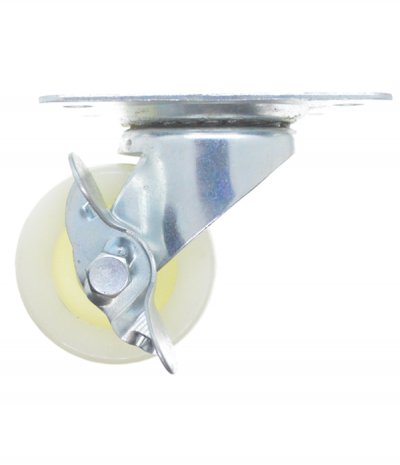
For television and film sets, camera dollies demand ultra-smooth, often grooved or crowned wheels that can track on pipe or run on smooth studio flooring. While some productions use pneumatic-tired dollies for outdoor shoots, indoor studio dollies typically rely on precision-machined polyurethane-tired casters with crowned profiles. Hsinbon supplies versions with machined aluminum cores and 92–95 Shore A urethane, offering the low rolling resistance and vibration damping needed for tracking shots.
Handling the Rigors of Touring and Festival Circuits
Not all theater casters live their lives on a permanent stage. Touring productions, music festivals, and trade-show exhibitors load gear into trucks, roll it across asphalt loading docks, then across carpeted convention-center floors, then onto a temporary stage. This abuse—gravel, potholes, expansion joints—requires a tougher caster than the delicate hardwood-floor model. Hsinbon offers a touring-grade line with thicker fork stampings, impact-resistant polyurethane (often Vulkollan®-equivalent high-performance PU available on request), and heavy-duty sealed bearings that survive dust and moisture ingress better than open races.
After the show, these same casters must perform indoors without marking the venue floor. The high-quality PU formulation bridges both worlds: resilient enough for outdoor loading, soft enough for non-marking indoor use. For companies that tour internationally, this eliminates the need to swap casters between load-in and performance—one Hsinbon touring caster does both jobs.
Ergonomics for Crew Safety
Stagehands push, pull, and pivot heavy loads in tight wings, often in near-darkness. A caster with high initial rolling resistance increases the risk of musculoskeletal strain. Hsinbon engineers its theater casters to minimize start-force: precision ball bearings in the hub, low-friction double-ball swivel raceways, and carefully tuned tread durometers mean a 400 kg loaded wagon can typically be started by a single adult with controlled effort on a level surface.
Shock absorption is another subtle safety factor. Rolling a props cart over a threshold or floor joint can jolt the contents—glass vessels, fragile electronics, antique props. Hsinbon's elastic-rubber or soft-PU treads absorb minor impacts, and for especially sensitive payloads (such as museum-display traveling cases or delicate instrument racks), the company's shock-absorbing caster series with spring-loaded or elastomer-damped yokes can be specified to further isolate the load.
Customization: Matching the Caster to the Wagon Design
No two theater shops build wagons identically. Some mount casters on a recessed top plate flush with the wagon underside; others use extended stems through a drilled hole in the plywood; still others bolt to an angle-iron perimeter frame. China Hsinbon Caster Manufacturing Co., Ltd. accommodates these variations with multiple mounting options—standard square top plates (e.g., 70×58 mm, 100×80 mm, 115×100 mm), threaded stems (M12, M16, ½"-13UNC, ⅝"-11UNC), and expanding stems for tubular leg insertion.
Offset (the distance from the mounting plate centerline to the wheel centerline) can be adjusted in custom tooling to achieve the desired swivel radius for a given wagon footprint. Wheel diameter, tread width, and overall height are matched to the wagon's ground-clearance budget. For historically themed productions or period-correct replica carts used in living-history venues, Hsinbon can supply casters with antique-finished yokes or wooden-look wheels—blending period aesthetics with modern load ratings.
Durability and Lifecycle: Fewer Replacements, Lower Total Cost
Backstage budgets are real. A regional theater may refurbish wagons once per decade; a university drama department might keep the same fleet for twenty years. Hsinbon stainless or zinc-nickel plated frames resist corrosion from humid wing spaces and occasional mop-down cleaning. Sealed swivel raceways keep sawdust and glitter out—two notorious enemies of stage casters. When eventually a wheel tread wears down after thousands of show cycles, the modular design allows bearing and wheel replacement without discarding the fork, extending service life and reducing waste.
The company's vertical integration—in-house stamping, welding, CNC machining, and polyurethane casting—means consistent metallurgy and polymer formulation batch to batch. For venues that standardize on Hsinbon casters across their wagon fleet, spare-part compatibility is assured even years later.
Real-World Feedback from the Wings
Technical directors at several municipal theaters in Asia and Europe have reported that switching to Hsinbon stage casters eliminated two chronic problems: floor marking (previously a weekly complaint from the stage manager) and brake slippage on older wagons. One touring opera company noted that after retrofitting their scenery dollies with Hsinbon total-lock PU casters, "wagons no longer drifted during ensemble numbers, and our crew could shift sets in near-silence—something the front-of-house staff actually commented on after one particularly fast blackout change."
Such testimonials underscore a simple truth: in live performance, the audience never notices good casters, but they—and the entire cast and crew—notice bad ones immediately.
Conclusion: Enabling the Magic, Invisibly
Theater is an art of illusion, timing, and teamwork. Every element backstage is in service of the story unfolding downstage. Casters may be the humblest part of a scenery wagon, yet they determine whether a scene change is magical or messy. China Hsinbon Caster Manufacturing Co., Ltd., through its Hsinbon brand of theater and stage casters, brings decades of engineering focus to this niche—delivering non-marking, quiet-rolling, securely locking mobility solutions tailored to the unique physics and aesthetics of performance spaces.
From Broadway-scale revolve wagons to community-theater flats wagons, from lighting truss dollies to camera tracking platforms, Hsinbon casters are there beneath the surface, making sure the only thing the audience hears is applause. In the words of one veteran stage manager: "If nobody mentions the wheels, we did our job right." With Hsinbon, that silence is engineered in.